Destructive Turf Pests vs. Under-Watering
The hidden destroyers, the nitrogen trap, and why a dry-looking lawn may not be thirsty at all.
Why Pest Damage Looks Like Drought
When St. Augustine grass yellows, wilts, and dries out during a hot Florida stretch, it is easy to blame irrigation. But some of the most destructive turf pests create symptoms that look nearly identical to severe drought stress.
That is what makes the mistake so expensive. If the lawn is being eaten, poisoned, or weakened by excessive nitrogen, adding more water does not solve the problem. It delays the correct response while the damage expands.
The Chinch Bug Illusion
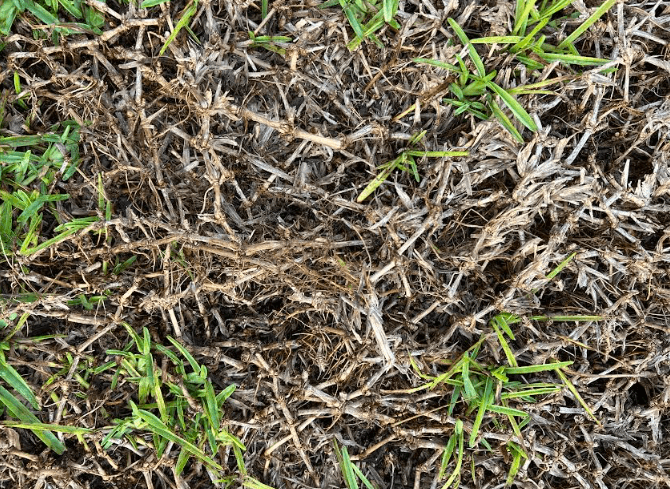
Chinch bugs are one of the most deceptive pests in Northeast Florida. These tiny, fluid-sucking insects pierce the lower stems of grass and inject toxic saliva that disrupts the plant's ability to move moisture.
The result is a lawn that looks thirsty even when water is present. Turf turns yellow, then straw-brown and crunchy, often spreading outward in expanding patches. Treating that as a watering issue gives the insects a head start.
Looks Like Water Stress
- Yellowing and wilting during hot weather.
- Dry, crunchy turf that appears parched.
- Damage that expands from stressed edges or hot spots.
Needs Pest Diagnosis
- Inspection near the edge of active damage.
- Review of fertility, thatch, and irrigation history.
- Treatment that targets the cause, not the symptom.
The High-Nitrogen and Thatch Trap
The All-You-Can-Eat Buffet
Cheap, high-nitrogen liquid fertilizers can force a fast neon green response, but that growth is often soft and weak. To pests, that lush tissue can become an easy food source.
The Suffocating Thatch Blanket
Excess nitrogen and over-watering can build a spongy layer of thatch above the soil. After winter injury, that dead organic layer can become a protected incubator for pest activity.

The Silent Shade Killer
Shade grass is already operating with limited sunlight. When it gets hit with the same high-nitrogen program as full-sun turf, the plant is pushed to grow leaves it cannot support. That drains energy away from root development and accelerates thinning.
Legal application rates are not the same thing as wise application rates. Shaded turf needs a more restrained, precise approach.
The Next Step
Harmony's Health First approach breaks this destructive cycle by using high-quality, slow-release granular nutrition and adjusting care to the micro-climates of the yard, including sunny and shaded zones.
The goal is steady, structurally sound growth, deeper roots, reduced thatch pressure, and faster identification of the real cause when turf starts to fail.
Request a Turf Diagnosis