Mowing, Irrigation, & Dollarweed
The cultural partnership: listening to what your lawn is telling you.
A Healthy Lawn Is a Partnership
A picture-perfect St. Augustine lawn is not built by treatment alone. It depends on a partnership between precise nutrition, pest control, mowing, and irrigation. When one part of that system is off, the lawn starts sending signals.
St. Augustine is thick, attractive turf, but it is sensitive to reckless maintenance. Mowing too low, watering too often, or watering at the wrong time can weaken roots, invite disease, and make weeds harder to control.
The Golden Rules of St. Augustine Mowing
Set the Mower High
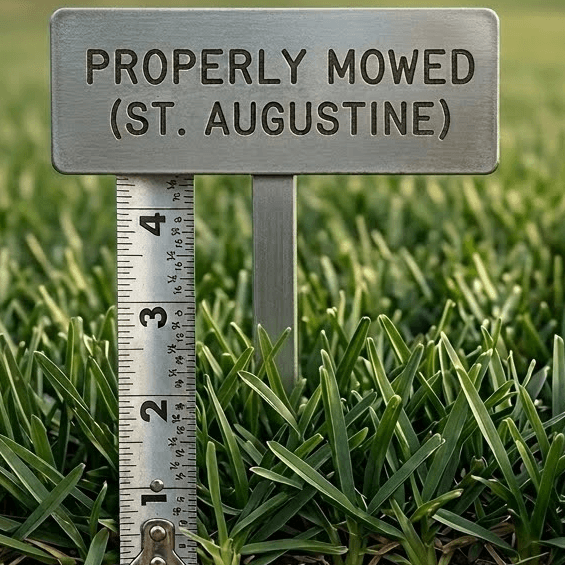
St. Augustine should usually be maintained between 3.5 and 4.5 inches. That extra leaf surface captures sunlight and shades the root zone, helping the turf compete against weed seeds.
Embrace the Mixed Lawn
Many yards contain more than one St. Augustine variety. Do not scalp taller varieties just to force a perfectly level look. Keep the deck high and protect plant health first.
Respect the 30% Shock Barrier
Never remove more than one-third of the blade at once. Cutting a tall lawn down hard shocks the plant, slows root development, and leaves turf more vulnerable to disease.
Demand Sharp Blades
Ragged, white, shredded grass tips are a sign of dull mower blades. Torn turf is stressed turf, and those wounds can become entry points for fungal spores.

Drop the Set-and-Forget Irrigation Mindset
Over-watering keeps moisture near the surface, so roots have little reason to grow downward. Deep, less frequent watering encourages roots to search for moisture, building a stronger foundation for Florida heat.
Your lawn will show you when it is thirsty: St. Augustine blades fold inward lengthwise and the lawn takes on a dull, bluish-gray cast. That is the right time to irrigate.
The Best Window
Water between 4:00 AM and 8:00 AM. Evening watering keeps blades wet overnight and encourages fungal disease. Midday watering can evaporate before roots get the benefit.
Make Roots Work
A lawn that always gets surface moisture develops shallow roots. A lawn that gets deep water at the right time can build drought resilience.
The Dollarweed Dashboard
Dollarweed is a living water indicator. Heavy dollarweed pressure often means the lawn is getting too much water, holding too much water, or dealing with a drainage issue.
Killing the weed without correcting the water problem misses the message. Dollarweed is not just a nuisance; it is your lawn reporting that the site conditions need attention.

The Next Step
A thriving landscape requires dynamic adjustment, not static routines. Raising the mower deck, sharpening blades, and watering only when the turf asks for it gives the lawn the strength to benefit from precision fertilizer and pest treatments.
Harmony can help connect what you see in the lawn with the right cultural corrections and treatment plan, building deeper roots and a more resilient yard.
Request a Lawn Health Review