Sago Palms & Cycad Scale
The white fuzzy death sentence versus the easy save.
First: Sagos Are Not Actually Palms
Despite the common name, Sago Palms are cycads, an ancient plant lineage that predates the dinosaurs. They still function as dramatic, palm-like focal points in St. Augustine landscapes, so the nickname has stuck.
Whatever you call them, Sagos are slow-growing, architectural accent plants. That slow growth is part of their beauty, but it also means damage can take a long time to recover if a pest infestation is ignored.
The Relentless Snow Effect
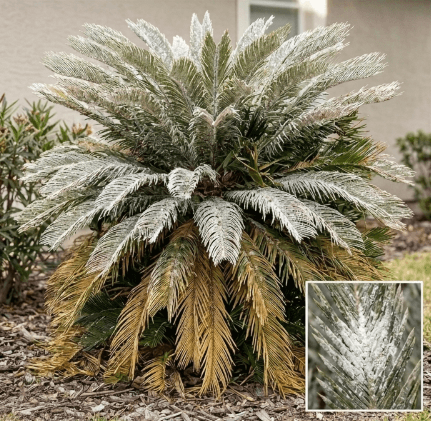
Asiatic cycad scale can make a Sago look like it has been dusted with white flocking or snow. It often starts near the base of lower fronds and moves outward until the plant is coated in a fuzzy, white crust.
The white coating is not cosmetic. These insects are feeding on the plant, draining strength from the fronds and slowly weakening the entire cycad.
Year-Round Breeding
In Florida's warm climate, cycad scale does not reliably shut down for winter. It can reproduce through much of the year, with new generations emerging in roughly monthly cycles.
The Hidden Root Army
One reason DIY sprays fail is that cycad scale can infest the root zone. Treating only the leaves may knock back visible insects while the hidden population climbs back up later.
The Structural Pruning Exception
Harmony generally favors targeted treatments over unnecessary trimming, but Sagos can be physically difficult to treat. A dense crown can block spray coverage and protect scale hidden deep inside the plant.
Strategic thinning can open the architecture enough for direct contact with the trunk and inner crown. The goal is not cosmetic stripping; it is treatment access and complete coverage.
The Ghost Scale Reality
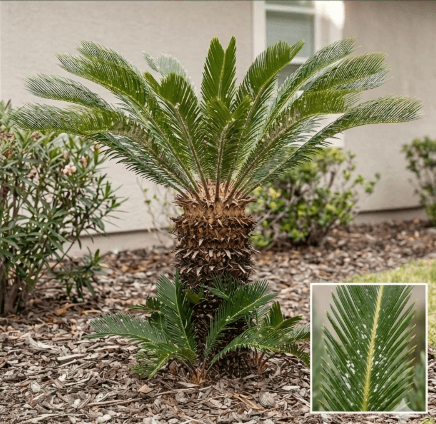
After professional treatment, scale insects can die quickly, but their armored white shells may stay attached to the fronds. Seeing white spots after treatment does not automatically mean the product failed.
Dead scale becomes dry and hollow, but rain and wind may take months to weather the old shells away. Keeping the plant structurally open also makes it easier to gently wash or wipe away the dead scale if you want faster visual recovery.
White crust on fronds or trunk
Scale returning after leaf-only sprays
Yellowing, thinning, or declining Sago foliage
The Next Step
Left unmanaged, cycad scale can drain a Sago over time until the plant collapses. The good news is that Sagos are tough, and they often respond well when the root zone, trunk, and crown are treated properly.
Harmony can deliver a precision root-and-stem treatment program that targets the visible infestation and the hidden population, helping restore the plant's deep green, tropical look.
Request Sago Scale Treatment